



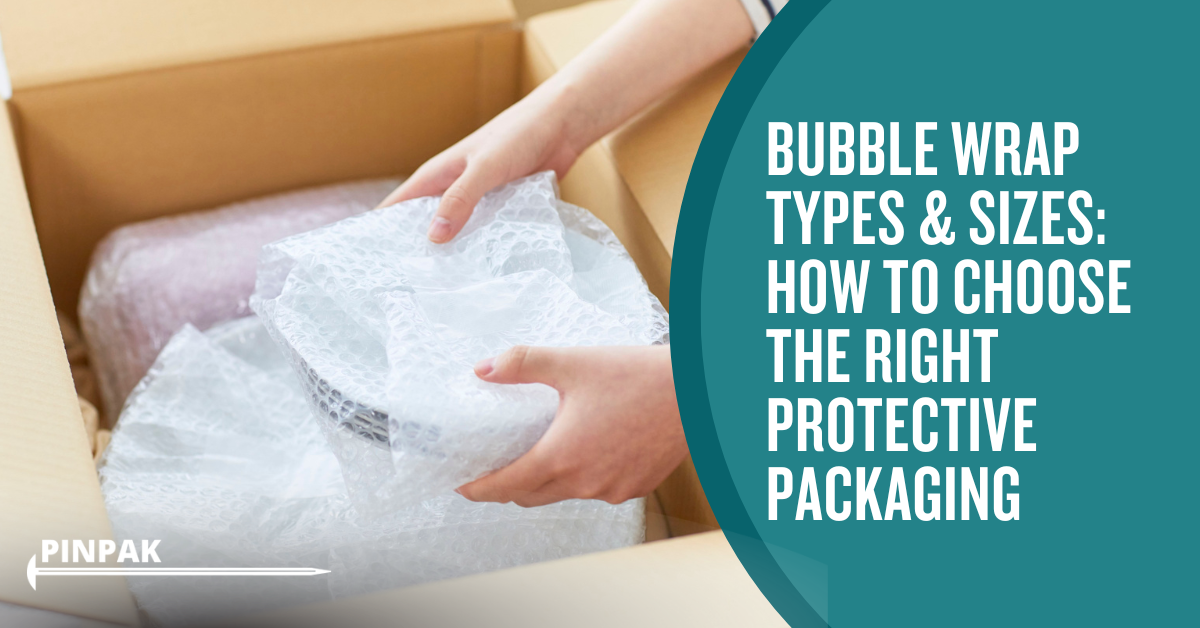
Bubble Wrap Types & Sizes: How to Choose the Right Protective Packaging
Bubble wrap comes down to two variables that decide whether it does its job properly, bubble size and roll width. Small 10mm bubble suits lightweight items, general mailing and multiple layers of wrap. Large 20mm and 32mm bubble gives more cushioning for heavier or awkward shaped items in fewer layers. Roll widths range from 375mm for small parcels up to 1500mm for pallets and furniture, and perforated sheets let you tear off the exact size you need. Antistatic bubble wrap, tinted pink, protects electronics from static discharge during storage and transport.
Picking the wrong type wastes money either way. Too little cushioning risks breakages and returns. Too much wrap on small items adds unnecessary freight weight and slows down packing.
Pinpak’s bubble wrap range covers both ends of that spectrum, from light 10mm rolls through to heavy 32mm bubble built for genuinely fragile freight.
Why Bubble Wrap Type and Size Actually Matters
Bubble wrap protects by trapping air, and the size of that air pocket determines how much impact it absorbs. A bigger bubble compresses further before an item feels the shock of a knock or a drop. Thickness plays a role too, since a thin film over a large bubble can still puncture under pressure. It’s worth choosing the right packaging thickness before you commit to a roll size for heavy or sharp edged stock. Getting the combination right means fewer damaged goods, fewer replacement claims and less time spent over wrapping items that never needed it.Small Bubble vs Large Bubble, What the Difference Means for Your Items
Pinpak stocks 10mm bubble as the standard option, ideal for glassware, ceramics, framed items and general mailing where moderate cushioning is enough. 20mm bubble roughly doubles the cushioning depth, which suits electronics, appliance parts and anything travelling further or changing hands more than once. 32mm bubble is the heaviest option in the range, built for furniture, machinery parts and freight that takes real knocks during transport and handling. Getting this right also protects your reputation. Our article on secure shipping with polybags explains why damage in transit is one of the fastest ways to lose customer trust.Bubble Wrap Roll Widths and Lengths Explained
Roll width decides how many layers you need to wrap around an item, and getting this wrong means wasted offcuts or gaps in coverage. 375mm and 500mm rolls at 50 metres suit small parcels, individual products and retail packing benches where space is limited. 750mm and 1500mm rolls at 100 metres are built for pallets, furniture and bulk dispatch, where wrapping speed matters as much as protection. Longer rolls also reduce how often staff stop to change stock, which keeps a packing line moving during busy periods.Perforated Bubble Wrap for Fast, Even Tear Sheets
Perforated bubble wrap comes pre scored into sheets, most commonly 300mm by 300mm or 375mm by 500mm, so staff can tear off a consistent size by hand. This removes the need for scissors or a cutting bench, which speeds up packing for businesses handling a high volume of similar sized items. It also cuts down on wastage, since every sheet is the same size instead of staff eyeballing how much to unroll.Antistatic Bubble Wrap for Electronics and Sensitive Stock
Antistatic bubble wrap is tinted pink and formulated to dissipate static charge, which protects circuit boards and sensitive components from electrostatic discharge. Businesses shipping computer parts, electronics or lab equipment should treat this as standard packaging rather than an upgrade, since static damage often isn’t visible until the item fails. It performs the same cushioning role as standard bubble wrap, so there’s no trade off in protection, only an added layer of safety for sensitive goods.How to Choose the Right Bubble Wrap for Your Business
Start with what you’re protecting. Fragile, heavy or high value items justify 20mm or 32mm bubble, while general stock is well served by 10mm. Then match roll width to your packing bench or pallet size, so you’re not fighting excess wrap or constant offcuts. Retailers and small dispatch teams often do best with perforated sheets, while high volume warehouses benefit from long, wide rolls that reduce changeover time. If you’re stocking more than one product type, it’s common to keep both a 10mm and a 20mm roll on hand rather than over protecting everything with the heaviest option.Frequently Asked Questions
What size bubble wrap should I use for glassware?
10mm bubble wrap is usually enough for glassware and ceramics when wrapped in two or three layers. For particularly fragile or high value pieces, step up to 20mm bubble for extra cushioning.What’s the difference between 10mm, 20mm and 32mm bubble wrap?
The number refers to the diameter of each air pocket. Larger bubbles hold more air and compress further, giving heavier or more fragile items more cushioning per layer.Is antistatic bubble wrap necessary for shipping electronics?
Yes, if the item contains circuit boards or sensitive components. Antistatic bubble wrap dissipates static charge that standard bubble wrap doesn’t, which prevents damage that isn’t visible until the product fails.What roll width is best for pallet wrapping?
750mm or 1500mm wide rolls at 100 metres are best for pallets and bulk freight, since wider rolls cover more surface area with fewer passes.Can perforated bubble wrap be used on a roll like standard bubble wrap?
Yes, perforated bubble wrap still comes on a roll. The difference is the pre scored tear lines, which let staff pull off a consistent sized sheet without cutting. Matching bubble wrap type to what you’re shipping is a quick way to cut breakages and packing time.Browse Pinpak’s full range of bubble wrap to compare bubble sizes and roll widths, or call 1300 421 527 to talk through stock for your next order.